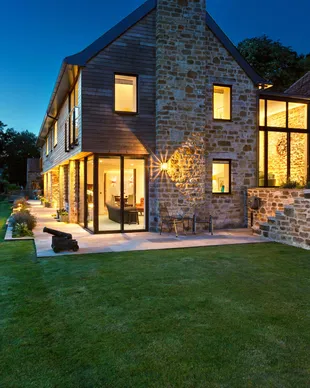
Blog: Lutron electric curtains - a case study
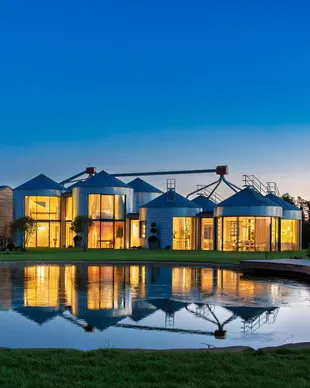
A case study of a unique Lutron electric curtains project at The Silos, a luxury country house in North Yorkshire.
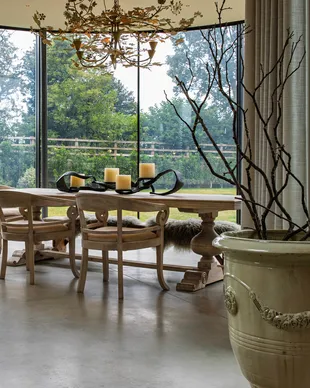
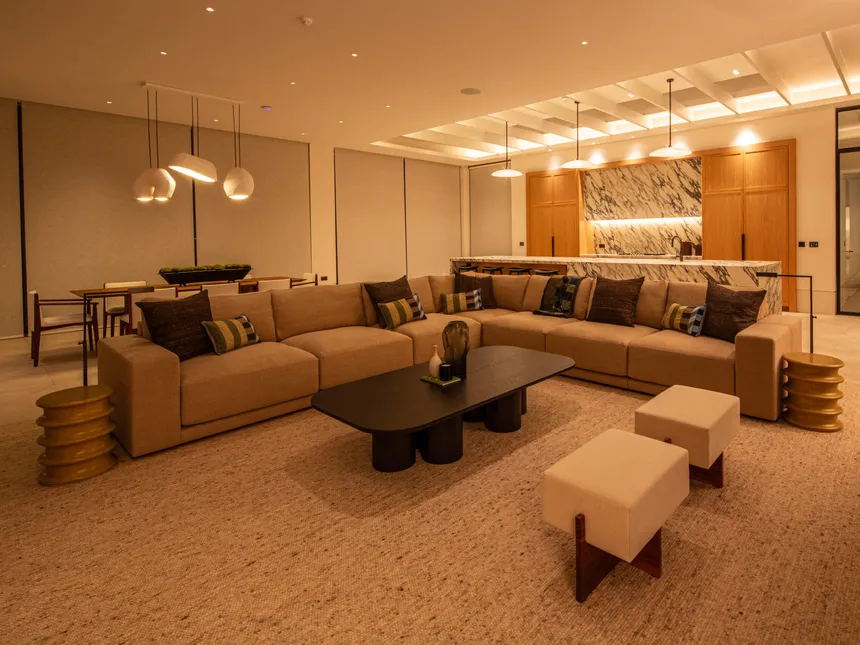
Light is never just one thing. It changes by the hour, the season and the mood of a room. In the most considered homes, the way light is managed is just as important as the way it is created. That is where beautifully designed lighting and intelligent window treatments belong together.
For homeowners, architects and interior designers, blinds and curtains are often thought of as a finishing touch. Something to soften a room, add privacy or frame a view. But in a modern luxury home, window treatments do far more than complete the look. When considered as part of the lighting design, they become part of a fully integrated control system that makes the home more comfortable, more efficient and far easier to live in.
At Brilliant Lighting, we believe light and shade should be designed as one seamless experience.
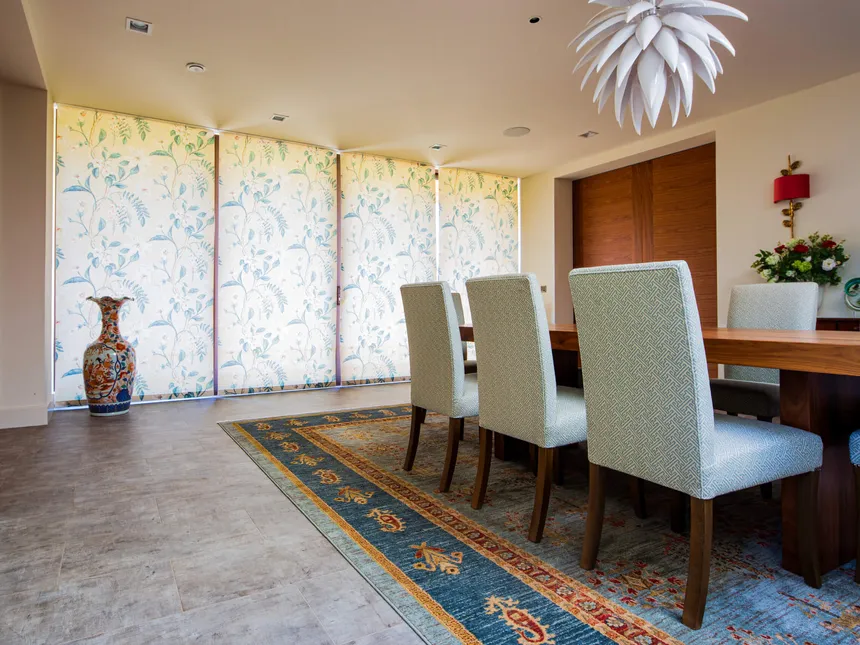
Natural light is one of the most powerful design features in any home. It can make a room feel bright, calm and expansive. It can also create glare, heat gain, fading, loss of privacy and uneven light levels.
Automated window treatments help control all of this. At the press of a single button, blinds or curtains can move quietly into position, making daylight as easy to manage as artificial light.
The difference is even greater when they are designed as part of the lighting scheme from the beginning. Rather than adding blinds or curtains later as a separate system, integrating them early means they can work beautifully with lighting controls, keypads, smart home systems and pre-set scenes.
The result is simple: one touch can adjust the lighting and window treatments together, creating the right level of light, comfort and privacy without needing to think about it.
The real value of specifying window treatments with your lighting designer is control.
A well-designed lighting control system allows you to set the right atmosphere for every moment. Morning, working from home, entertaining, relaxing, cinema mode, bedtime. When motorised blinds, curtains or sheer treatments are included in that same system, the experience becomes even more effortless.
For example, a “Good Morning” scene can gently raise blinds, bring up soft lighting and let the home wake gradually. A “Dinner” scene can lower blinds for privacy while dimming lights to a warm, welcoming level. A “Movie” scene can close curtains, reduce glare and set the room lighting perfectly.
It is not about technology for the sake of technology. It is about making the home feel intuitive.
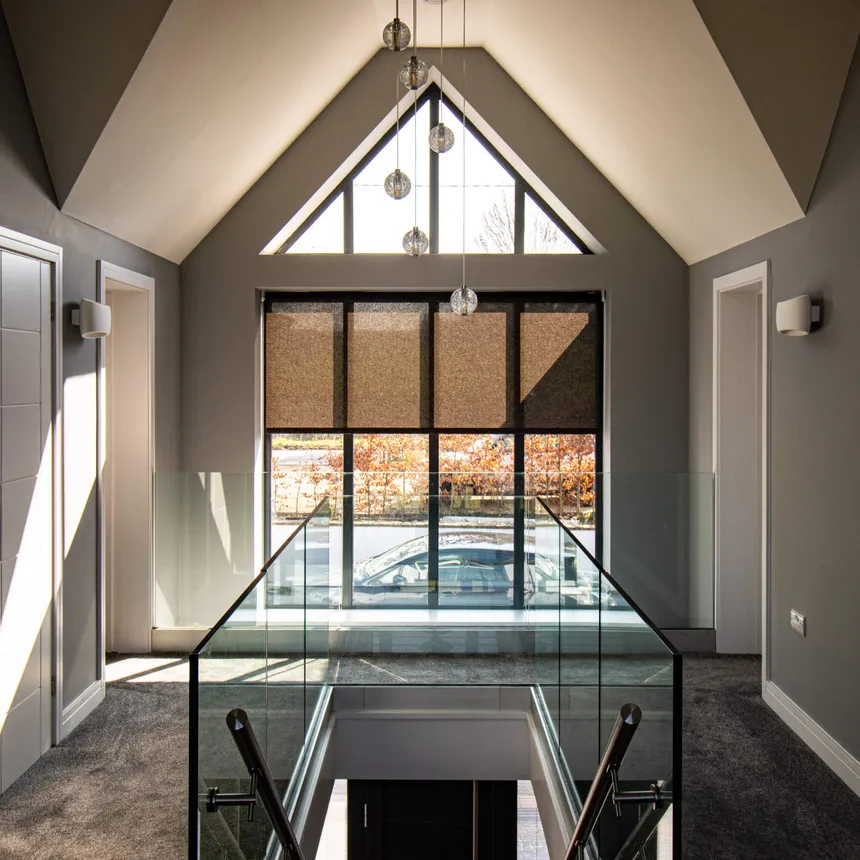
Every home has different routines. Some spaces need privacy at certain times of day. Others need protection from strong sun. Large glazed areas may need automated shading to prevent overheating. Bedrooms may need blackout blinds linked to a bedside control. Living spaces may need layered treatments that shift from daylight to evening with ease.
When window treatments are considered by the lighting designer, these needs can be built into the design from the start.
That means the controls are in the right place. The wiring is planned properly. The scenes make sense. The interface is simple. And everything works as part of one joined-up system, rather than several separate solutions competing with each other.
This is especially important in high-end residential projects, where detail matters and the expectation is that everything should feel effortless.
One of the biggest advantages of integrated lighting and window treatment design is simplicity.
Without a coordinated approach, a home can quickly become cluttered with switches, remotes, apps and control panels. Lighting on one system. Blinds on another. Curtains controlled by a separate remote. Smart home features hidden in different apps. We don't think there's anything smart about having to fish in your pocket for your phone to turn your lights on.
A properly designed control system removes that friction.
Elegant keypads can control lighting, blinds and curtains from one place. Scenes can be personalised to each room. Controls can be labelled clearly and programmed around the way the household actually uses the space.
This gives you a cleaner interior, a better user experience and a home that feels beautifully considered.
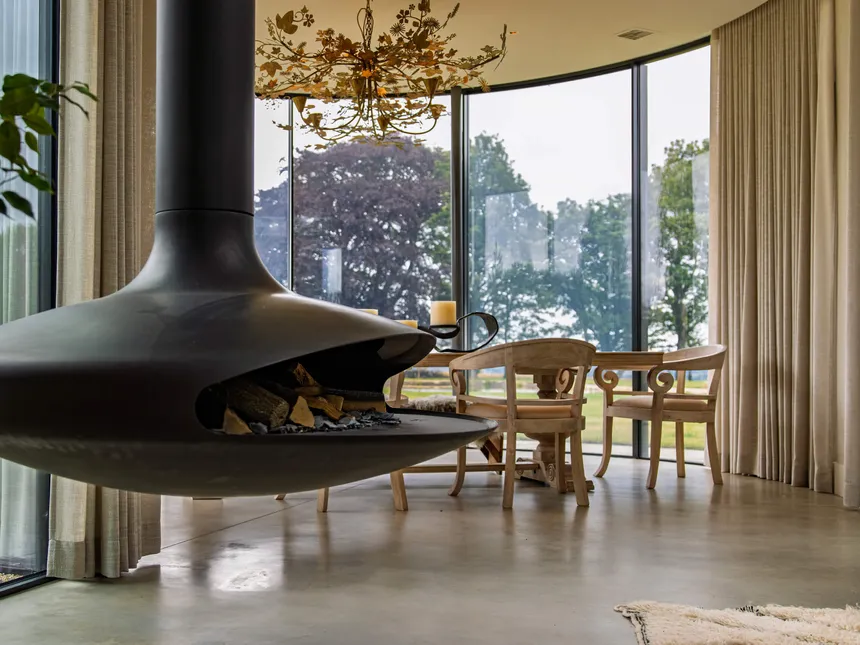
Intelligent window treatments do more than create atmosphere. They also help a home perform better.
Automated blinds can reduce glare during the brightest parts of the day. They can help keep rooms cooler in summer by managing solar gain. In winter, curtains and blinds can add an extra layer of comfort and insulation. In the evening, they can close automatically to protect privacy without anyone needing to walk around the house.
When connected with lighting control, this becomes even more powerful. The home can respond to time of day, light levels, occupancy or pre-set scenes. Lighting can adjust as blinds move. Rooms can remain comfortable, practical and beautifully lit without constant manual changes.
This is particularly valuable in homes with large windows, rooflights, open-plan living spaces or extensive glazing.
The best results come when lighting and shading are planned together at the design stage.
Early specification allows the team to consider power requirements, control wiring, motor locations, blind pockets, curtain tracks, keypad positions and integration with wider smart home systems. It also helps avoid compromises later, such as visible cabling, awkward controls or systems that do not communicate properly.
For architects and interior designers, involving the lighting designer in window treatment specification can make the whole process smoother. It ensures the technical infrastructure supports the design intent, while keeping the end-user experience simple and elegant.
For homeowners, it means the finished home works exactly as it should.
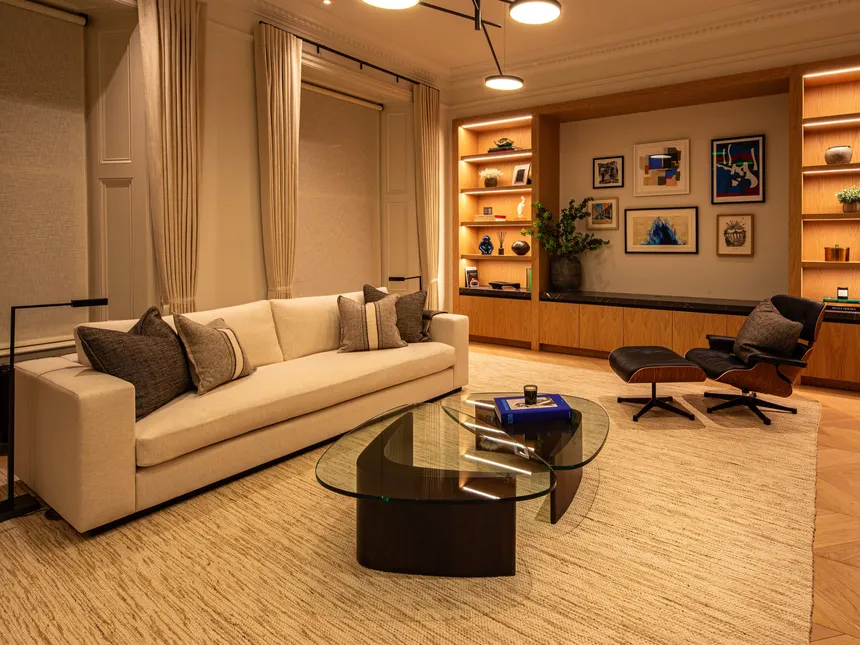
Smart home technology should never feel complicated. It should quietly support the way you want to live.
By integrating window treatments with lighting design, the smart home becomes more coherent. You can control rooms individually or manage the whole house. You can create scenes for everyday routines. You can set automated schedules. You can use keypads, apps or voice control depending on your preference.
Most importantly, you are not left managing multiple disconnected systems.
Everything is designed, programmed and refined as part of one experience.
Window treatments are not simply decorative. They are an essential part of how a home manages natural light, privacy, comfort and atmosphere.
When they are specified by your lighting designer, they become more than blinds or curtains. They become part of the lighting control strategy, part of the smart home and part of the everyday rhythm of the property.
Brilliant Lighting design lighting and control systems that make homes feel exceptional. By considering light and shade together, we help create spaces that are beautiful, intelligent and effortless to live in.
For a home that responds perfectly from morning to night, lighting and window treatments should never be an afterthought. They should be designed together from the very beginning.