Blog: Brilliant light a unique art collection at Hever Castle
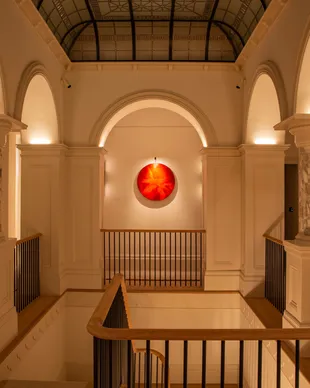
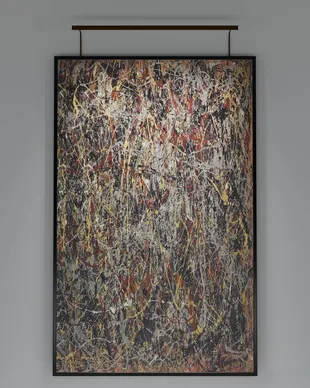
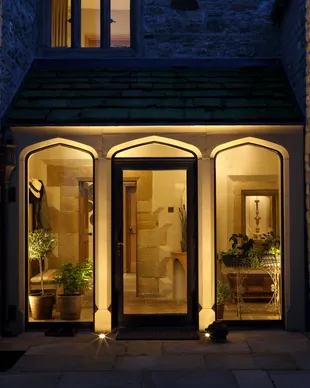
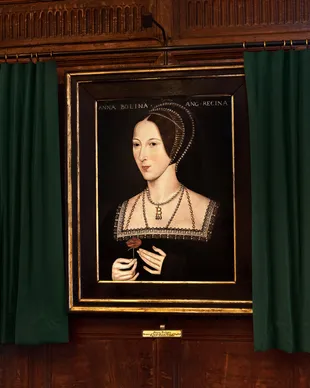
The team finalise preparations for the launch of the Tudor exhibition at Hever Castle and fine tune the lighting.
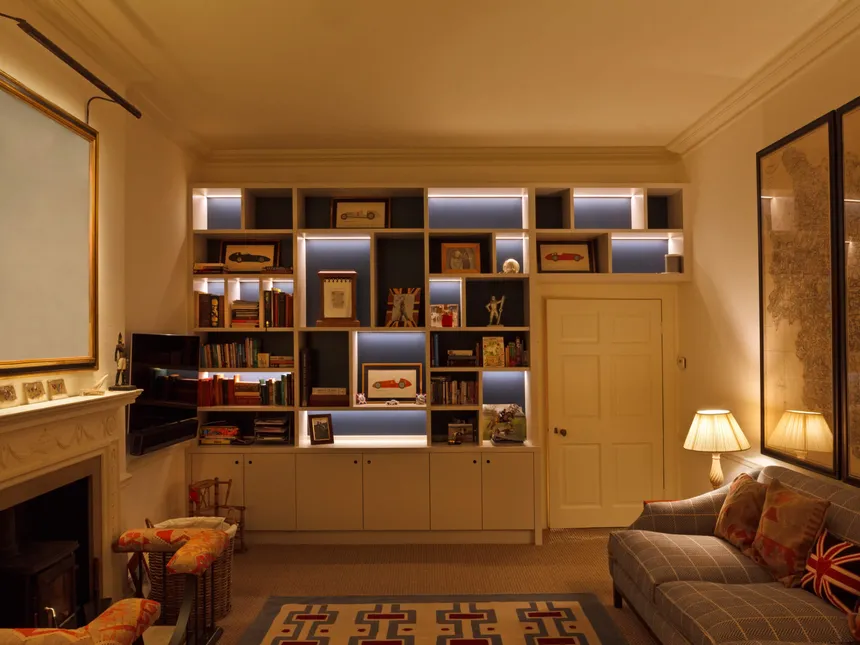
A gallery wall can look quietly expensive, or instantly improvised. The difference usually isn’t the art itself. It’s the decisions around it: a clear idea, consistent spacing, balanced scale and lighting that allows the wall to read properly after dark.
If you’ve ever finished hanging frames and thought, “Why does this still feel a bit off?”, you’re not alone. Most gallery walls fail for the same reasons: the layout wasn’t planned as a whole, the spacing drifts, the scale is wrong, or the lighting is treated as an afterthought.
An intentional gallery wall needs one story and one set of rules.
The story might be travel photography, family portraits, architectural sketches, botanical prints, a colour palette, a period, or simply a consistent frame finish.
Everything does not need to match. The best gallery walls often have some variation. But there does need to be something that ties the collection together, otherwise the wall can quickly feel like a group of unrelated frames.
Once you have the story, create rhythm. Repeated frame colours, mount styles, proportions or spacing give the eye something to follow.
Before you pick up a drill, step back and design the wall as a whole.
Start by thinking about how it will be viewed. A hallway wall is usually seen in motion and from close range. A wall above a sofa is viewed from one main position. A stair wall is seen from changing heights and angles. That context affects scale, density and lighting.
Next, choose an anchor piece: the largest frame, strongest image or piece with the most emotional weight. It gives the layout a starting point. Everything else should feel as though it belongs around it.
Then choose the arrangement. A grid feels calm and architectural. A salon-style layout feels collected and expressive. A linear arrangement works well in corridors and narrow spaces where you want rhythm without clutter.
Most importantly, choose your spacing before anything goes on the wall. Consistent spacing is one of the fastest ways to make a gallery wall look professional.
The most common gallery wall issue is drift: tiny differences in spacing and alignment that make the whole wall feel unsettled.
Use a spacer, paper template or folded piece of card to keep gaps consistent. Small variations may not seem obvious close up, but they become noticeable when you view the wall as a whole.
Alignment matters too. Choose one approach and commit to it. You might align the centres of the frames, hold a strong top or bottom line, or build around a central anchor. What usually looks messy is mixing too many alignment ideas at once.
Balance is more important than symmetry. Larger, darker or bolder pieces feel heavier, so they often need more breathing room. Smaller, lighter pieces can sit closer together.
Scale is another common trap. A small collection on a large wall can look lost. If you are working with smaller pieces, group them more tightly or introduce larger frames, wider mounts or a stronger anchor piece.
Frames are like typography: they quietly set the tone. Matching finishes can make varied artwork feel more cohesive, while mixed frames can work if the spacing and alignment are especially consistent.
If the artwork is behind glass, pay attention to reflections. A gallery wall opposite a window, mirror or bright light source can reflect glare back into the room, making the wall feel busy even when the layout is strong.
A gallery wall may look balanced in daylight, then fall flat in the evening. Once the room relies on artificial light, the artwork can become patchy, dull or reflective.
For most domestic gallery walls, especially those made up of several small or medium-sized frames, the best solution is usually well-positioned adjustable downlights rather than individual picture lights over every piece.
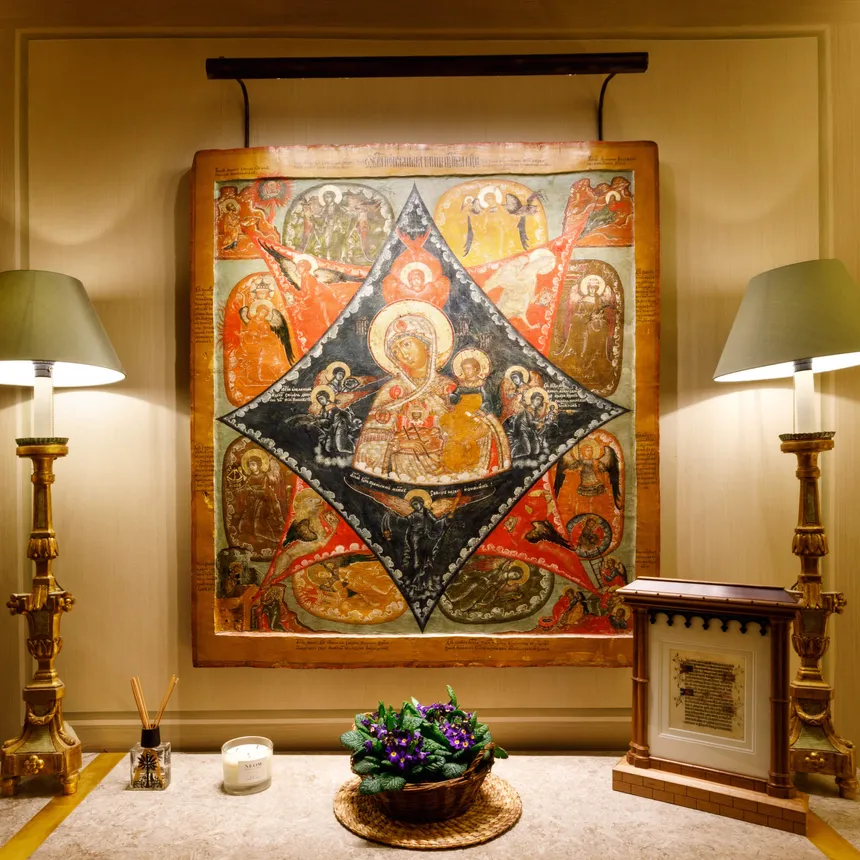
A picture light for each painting can look beautiful in the right setting, for instance in a traditional country house with generously sized walls and artwork. For smaller scale schemes though this could become visually cluttered, and we would typically use very high quality adjustable downlights instead.
A series of adjustable downlights allow you to light the gallery wall as one composition. The fittings stay discreet, while the wall receives a soft, even layer of light.
Choose downlights with excellent colour rendering so the artwork looks natural, and keep the colour temperature consistent across the wall. Adjustable fittings allow the beam to be directed onto the artwork rather than simply lighting the floor.
A soft-edged beam is usually more flattering than a crisp one, which can create obvious pools or scallops of light. Where possible, put the gallery wall lighting on a separate circuit or scene so it can be dimmed independently in the evening.
Ideally - and this is true of lighting any artwork - the gallery wall lighting should be considered as part of the overall room scheme rather than an additional bolt on.
Picture lights definitely have a place. They work well for a single hero artwork, a pair of larger framed pieces, or a formal arrangement where each fitting has enough space to breathe.
The key is scale. A picture light should feel proportionate to the artwork and the wall. For tighter gallery walls, adjustable downlights usually give the cleaner result. For larger pieces or more formal arrangements, picture lights can add focus, character and a more decorative finish.
A gallery wall isn’t just a collection of frames. It’s a composition.
Start with a clear story, keep the spacing consistent, balance the scale and plan the lighting as part of the design. For most gallery walls, adjustable downlights with good colour rendering, a soft beam and independent dimming will give the cleanest result.
For certain settings, picture lights would give the optimum results.
If you are planning a renovation or a new build, please do contact us very early in the process, well before the electrician is wanting to run any cable. We can discuss your project, how we can help and how we can bring your artwork to life.