Blog: Fine-tuning the lighting in a Victorian villa ahead of completion
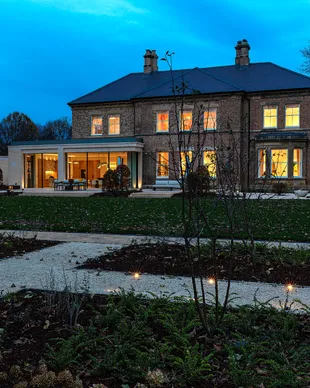
Fine-tuning the lighting, blinds and control in a Victorian villa ahead of completion and handover
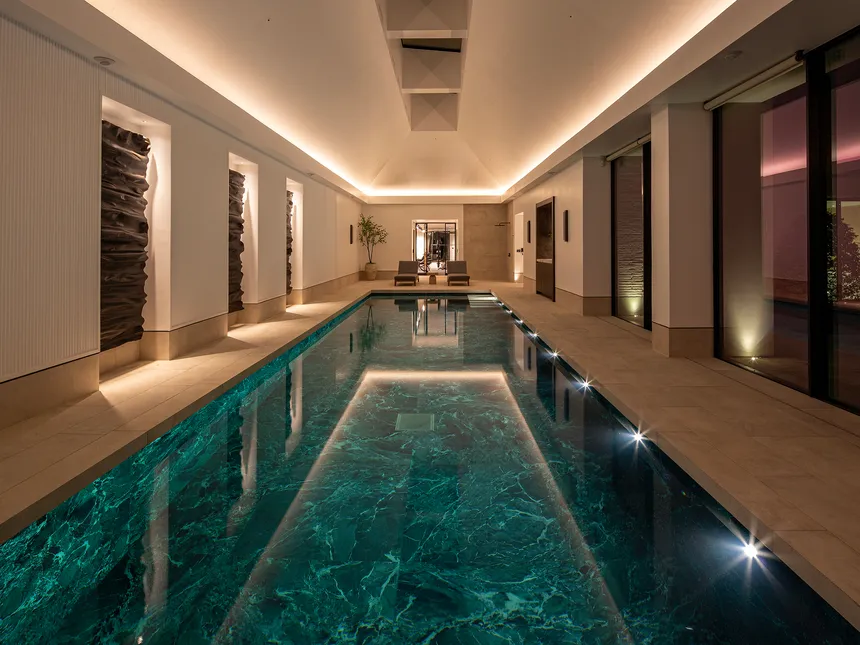
When we approach a lighting design, we are not only thinking about the final ‘wow’ moment - although that is always in mind. Just as importantly, we are considering the practical steps required to achieve it. Fixing points, wiring routes, cable positions and driver locations are never afterthoughts; they are integral to the design from day one.
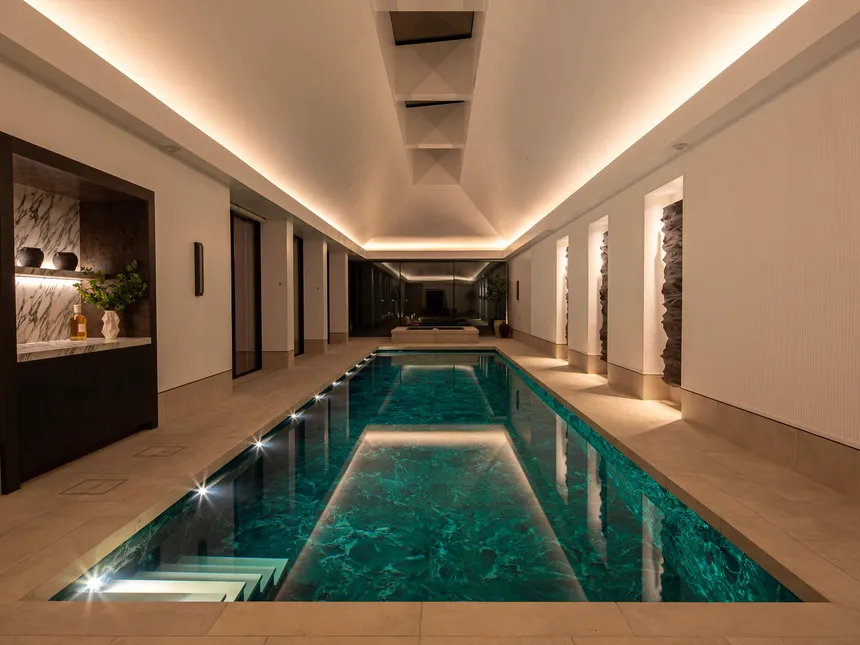
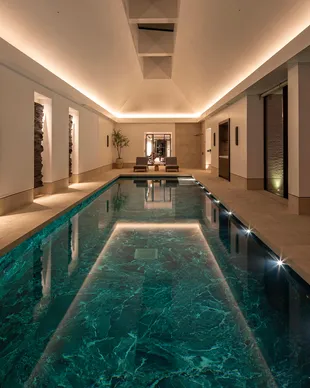
For this swimming pool project, collaboration was key. We worked closely with the architect and build team to explore the most appropriate approach. Would downlights suit the space? Could surface-mounted spots deliver the right effect? Or could the architecture itself help conceal the light source?
Through a series of discussions, sketches and render studies, we developed the idea of integrating a high-output linear light within a coffer detail. This allowed the architecture to work harder - concealing the source while delivering the main source of lighting across the space.
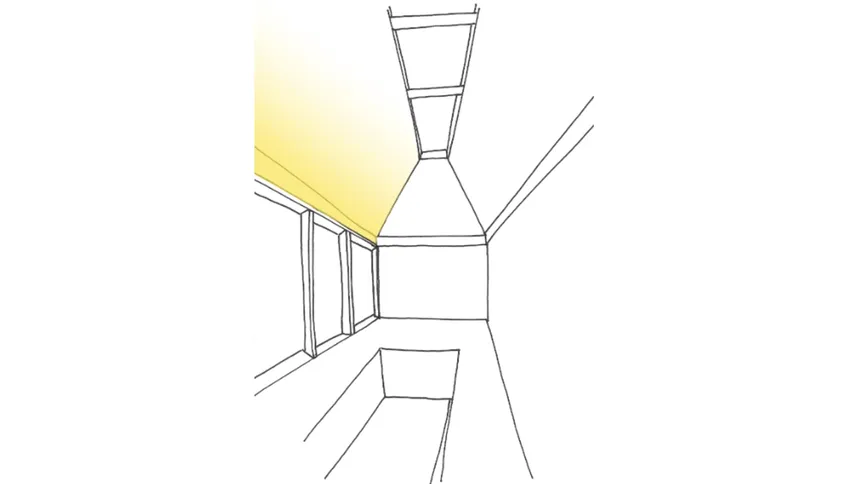
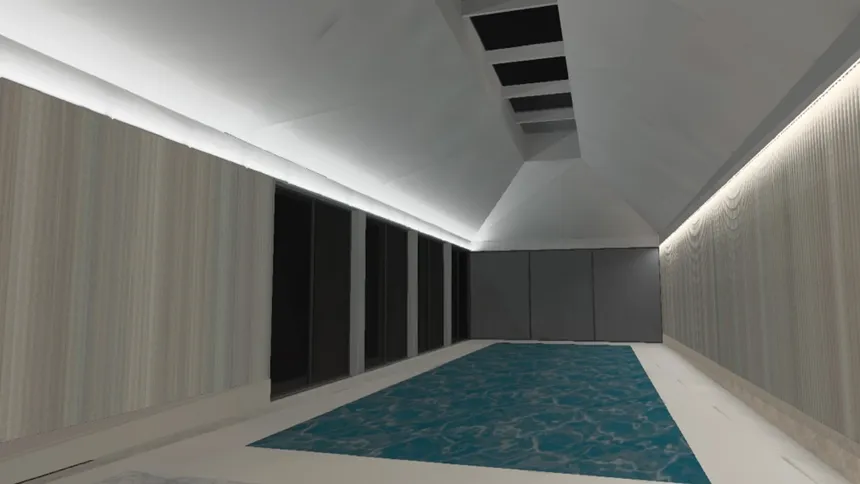
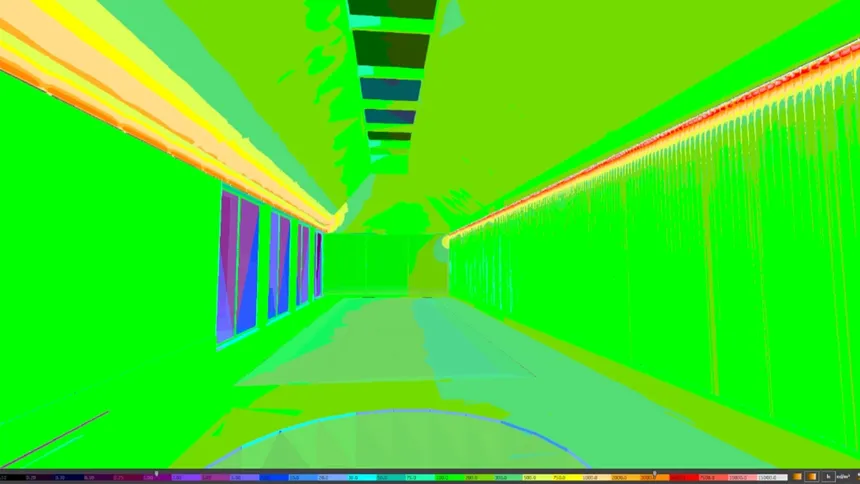
Product selection was critical. Beyond achieving the required light output the fitting needed to be the correct IP rating for a pool environment. Using manufacturer photometric data within our DIALux software, we tested light levels, intensity and coverage to ensure the chosen linear would provide consistent illumination across the room. The colours provide a visual representation of the light levels. Here, the reds, oranges and yellows highlight the highest concentration of light around the source, while also illustrating how the fitting distributes light across the wider pool area.
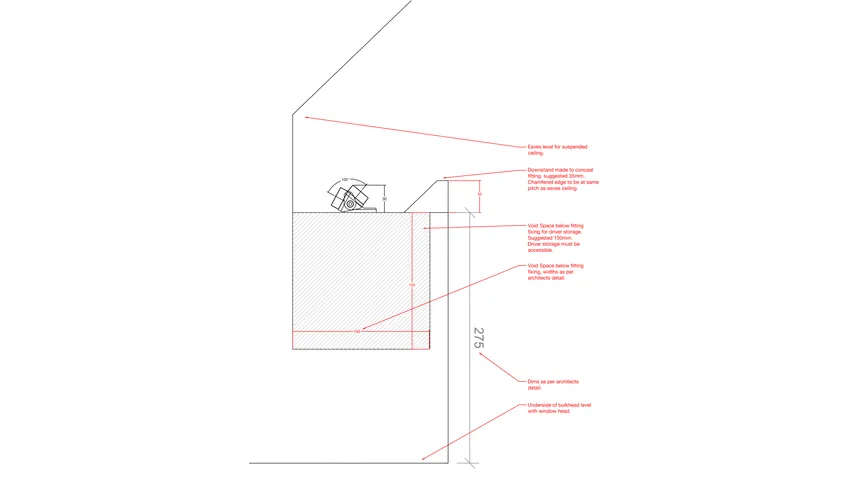
Once the principle and product were agreed, attention turned to refinement. The fixing method was carefully considered to allow precise adjustment after installation, enabling the light to be directed up and out exactly as required. An architectural upstand concealed the fitting from view, maintaining a clean visual line, while also providing a discreet place to house remote drivers with future access for maintenance. Thinking ahead is essential. Installation practicalities and long-term servicing are built into the design to avoid unnecessary complications later.
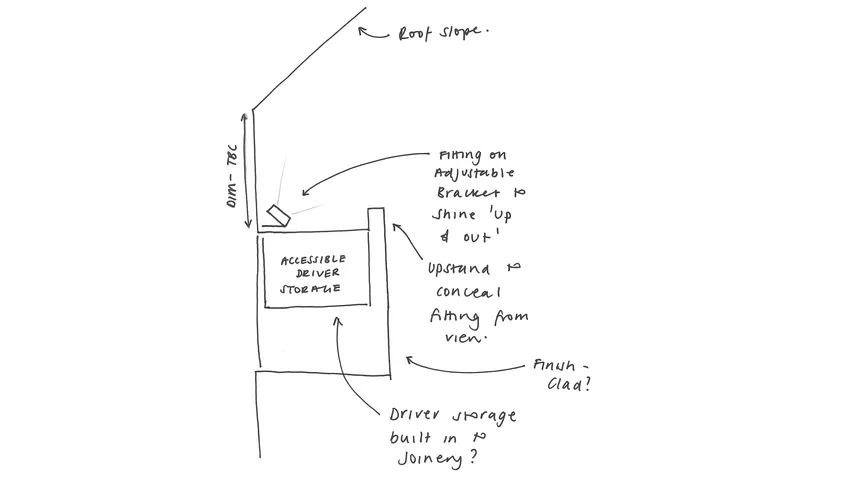
As part of our design pack, we issue full plans and technical drawings for the site team. In projects such as this, additional sectional details ensure that the original design intent is clearly understood and accurately executed on site.
The result is a scheme that feels effortless but is underpinned by careful planning, technical precision and a deep understanding of both light and architecture.