Blog: Designing a gallery wall at home: how to make it feel intentional
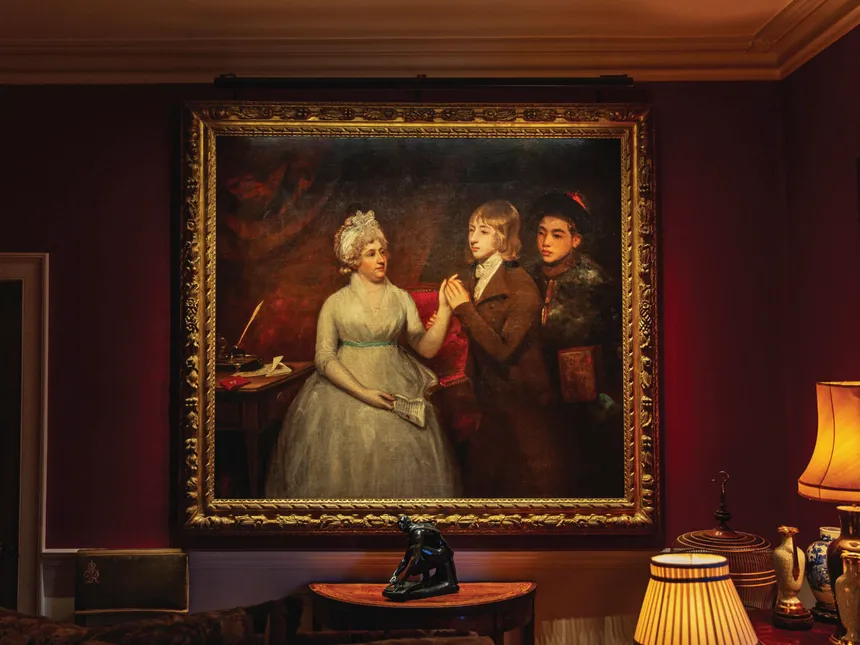
Lighting fine art in a private home is a balancing act. The artwork should look exceptional, but the lighting also needs to sit comfortably within the architecture and atmosphere of the room, all while considering the long-term care of the collection.
At Brilliant Lighting, we have spent more than 20 years designing lighting for private homes, historic interiors and significant collections. Our approach to fine art lighting combines the precision of gallery and museum lighting with something equally important: an understanding of how people actually live with art.
Good art lighting reveals the work rather than the lighting. Colour should feel faithful, texture and detail should be visible, and light should fall evenly where it is intended. There should be no distracting glare, reflections or obvious pools of light. Achieving that depends on far more than simply choosing a bright spotlight with a high CRI.
The artwork itself comes first. Its size, medium, surface, frame and sensitivity to light all influence how it should be illuminated. We then consider its position within the room, the available lighting positions, natural daylight and the wider lighting scheme. The result might be a picture light, an architectural spotlight, a framing projector or a combination of techniques. There is no single solution that is right for every artwork.
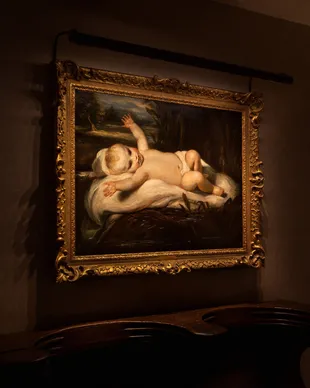
An oil painting, a work on paper and a contemporary mixed-media piece can behave very differently under the same light. Highly textured paintings can come alive when light reveals the relief of the brushwork. Works behind glass introduce reflections. Dark paintings may need careful control to reveal subtle detail without simply increasing the overall light level. Works on paper and other sensitive materials require particular consideration because of their susceptibility to light exposure.
Scale matters too, a small painting is relatively straightforward to illuminate evenly. As artworks become larger, the geometry becomes much more challenging. A light source that appears perfectly adequate at the centre of a canvas can leave its edges noticeably darker.This is one of the reasons we believe art lighting should begin with the work itself, rather than a predetermined type of fitting.
Light has an enormous influence on the colours we perceive in a painting. Colour rendering is therefore particularly important when specifying lighting for art, but a headline CRI figure doesn't tell the whole story. The quality and spectral characteristics of the light source affect how individual colours are rendered, which is why two apparently similar LED fittings can make the same painting look surprisingly different.
Colour temperature also needs consideration. There isn't one universally correct colour temperature for art. The character of the artwork, its setting, the materials surrounding it and the rest of the lighting scheme all matter. The objective is not to impose a particular character on the work, but to allow its colours to be seen beautifully and naturally within the space.
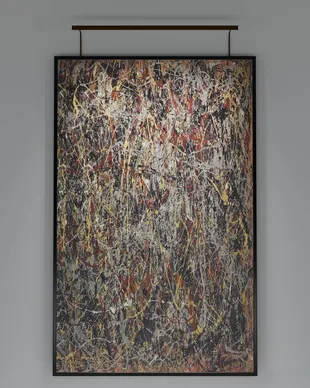
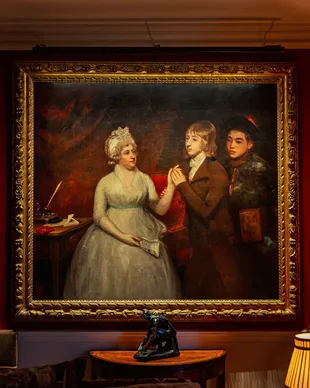
Large paintings are particularly unforgiving. With a conventional picture light, it is relatively easy to produce plenty of light close to the fitting while struggling to achieve the same illumination further down or across a large canvas. Ceiling-mounted sources have their own challenges: mounting position, distance, beam angle and optics all affect the final result.
This is an area in which careful optical control becomes extremely important. Our experience of trying to solve this problem ultimately led to the development of ArtView. Rather than accepting the limitations of a conventional picture light, we wanted to rethink how light could be distributed across a work while retaining the elegant, familiar form of a picture light. Whatever the solution, our objective remains the same: you should notice the artwork, not the technique used to illuminate it.
One of the questions we're often asked is which type of light is best for paintings. The answer depends on the artwork and the room. A well-designed picture light creates an intimate relationship between the source and the artwork. It can be particularly appropriate in traditional interiors and historic houses, as well as situations where introducing additional ceiling lighting would be visually intrusive.
Architectural spotlights allow the source to sit away from the artwork and can be extremely discreet. The quality of the optics and positioning are crucial, however; simply aiming a ceiling spotlight at a painting rarely gives the most considered result. A framing projector can shape light very precisely around an artwork. When correctly set up, the effect can be striking, with the painting illuminated and relatively little light spilling onto the surrounding wall.
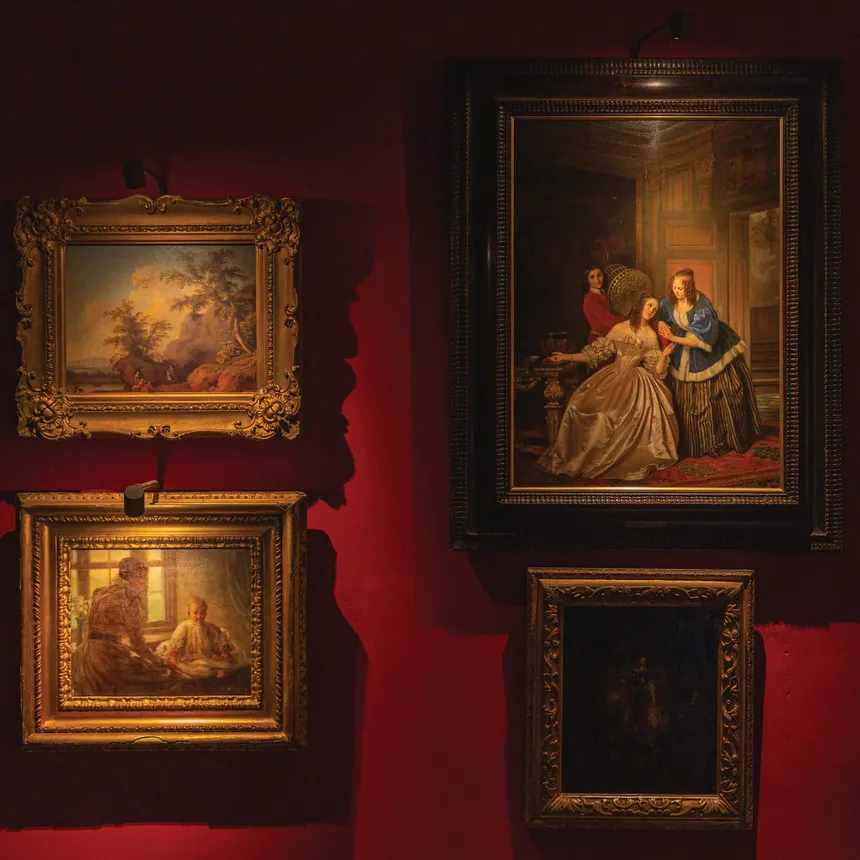
Track lighting provides flexibility and is particularly useful for collections that change regularly, allowing fittings to be repositioned and refocused as artworks move. Across a whole house, we may use several of these approaches. Consistency doesn't mean using the same fitting everywhere; it means creating a scheme in which each artwork feels appropriately lit.
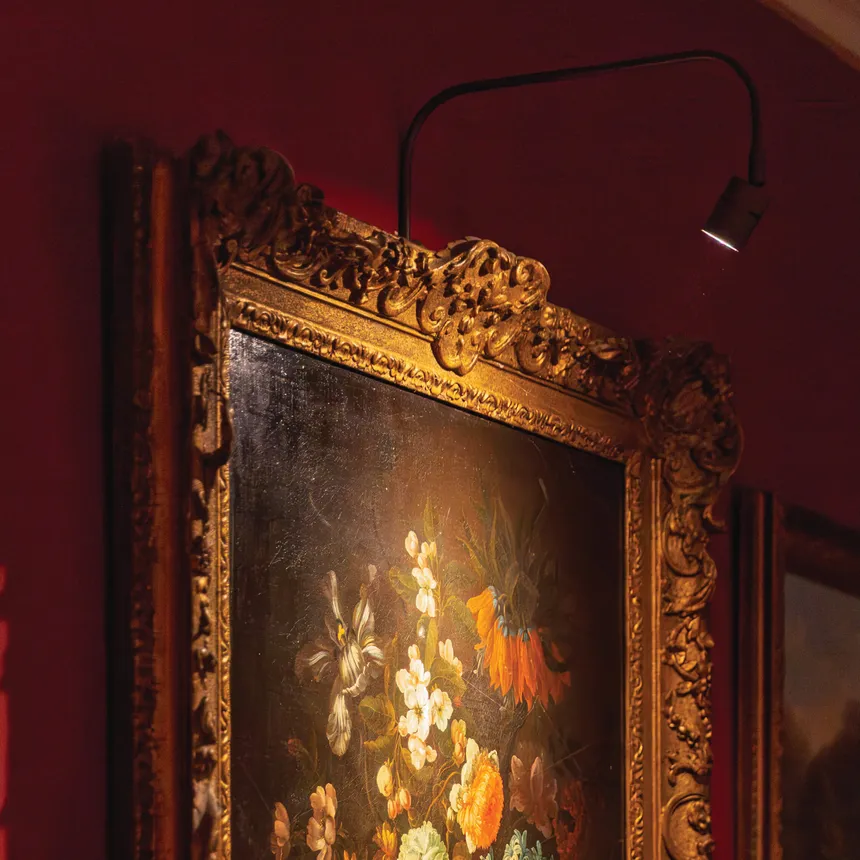
Light is essential to seeing art, but it can also contribute to its deterioration. The effect is cumulative: both the amount of light reaching a work and the length of time it is exposed matter. Different materials have very different sensitivities, with works on paper, textiles and certain pigments generally requiring greater care.
Modern, high-quality LED lighting offers significant advantages over older technologies, including very low levels of ultraviolet and infrared radiation. However, visible light itself still contributes to exposure, so simply choosing LED does not remove the need for careful design. For sensitive or important pieces, we consider illumination levels, daylight and duration of exposure alongside the visual result.
Lighting control can be particularly valuable here. Rather than leaving artwork illuminated whenever a room's general lighting is switched on, it can become part of carefully considered scenes and respond to how the room is actually being used.
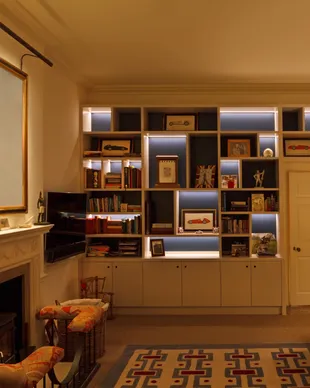
Museum lighting provides useful lessons in precision, colour quality, conservation and control. But a home is not a gallery. A painting might sit above a fireplace, beside a favourite chair or at the end of a long view through several rooms. It is experienced alongside architecture, furniture, fabrics, objects and people.
This changes the way we think about the light. The artwork might be the strongest visual element in a room, or it may need to sit quietly within a wider composition. At different times of day, that relationship can change again.
This is where our experience in both artwork lighting design and residential lighting design becomes particularly useful. We can consider the collection as part of the complete lighting scheme rather than treating it as something to illuminate afterwards.
For a new build or substantial renovation, fine art lighting should ideally be considered before electrical positions, ceiling details and joinery are finalised. If we know where significant pieces are likely to hang, we can consider viewing angles, lighting positions, wiring and control from the outset. This gives us far more freedom to make the eventual solution discreet. It doesn't mean every painting needs to have a permanent position before building work begins. Collections evolve and artworks move. A good scheme can provide flexibility for that.
Existing houses are different. Here, we work with the architecture and electrical infrastructure already available, finding the best solution without unnecessary intervention. For significant projects, we can work alongside the homeowner, architect, interior designer, art consultant, curator and electrical contractor so that the art lighting forms part of the wider design rather than becoming a late addition.
Our work with art ranges from much-loved individual paintings in private homes to important collections in historic settings.
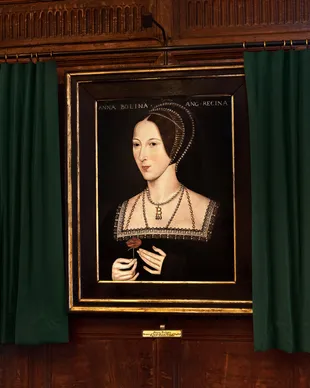
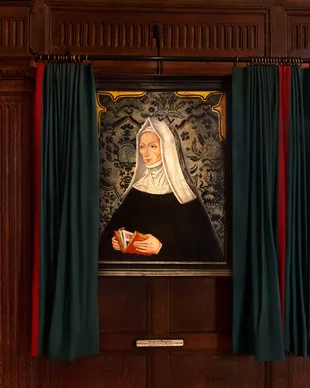
At Hever Castle, for example, we have worked on specialist lighting for its Tudor portrait collection, where the quality of the illumination has to be considered alongside the sensitivity of the collection and the character of the historic interiors.
Private homes bring a different set of challenges. Collections may span centuries and include works of dramatically different scales, materials and values, while the lighting still needs to create a comfortable home at the end of the day.
That combination of technical precision and residential understanding is central to the way we approach fine art lighting.
Brilliant Lighting provides specialist fine art lighting services for private homes and collections throughout the UK. Our involvement can range from solving the lighting for an individual work to designing the lighting for an entire collection as part of a complete residential scheme. Depending on the project, this can include assessment of the artwork and its setting, lighting design and specification, specialist picture lighting and ArtView, architectural lighting, lighting controls, equipment supply, programming, commissioning and final focusing on site.
Above all, our aim is very simple: to allow exceptional art to be seen in its best light.
Good-quality LED lighting is well suited to illuminating artwork because it produces very little ultraviolet or infrared radiation compared with many older light sources. However, visible light still contributes to cumulative light exposure, so sensitive artworks need appropriate light levels and control.
There is no single colour temperature that is best for every artwork. The work itself, surrounding interior, materials and wider lighting scheme should all be considered. Colour rendering and the overall quality of the light source are just as important as colour temperature.
Large paintings require careful control of beam distribution, position and distance. Depending on the artwork and room, the solution might use specialist picture lighting, carefully selected architectural optics, multiple sources or a bespoke approach.
Yes. Although planning art lighting during a renovation or new build provides the greatest flexibility, specialist solutions can also be designed around the wiring and architectural constraints of an existing property.