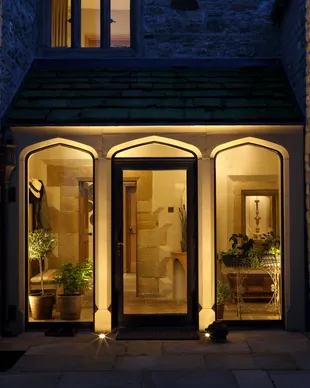
Blog: A barn lighting case study
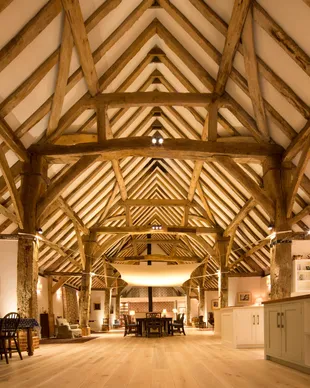
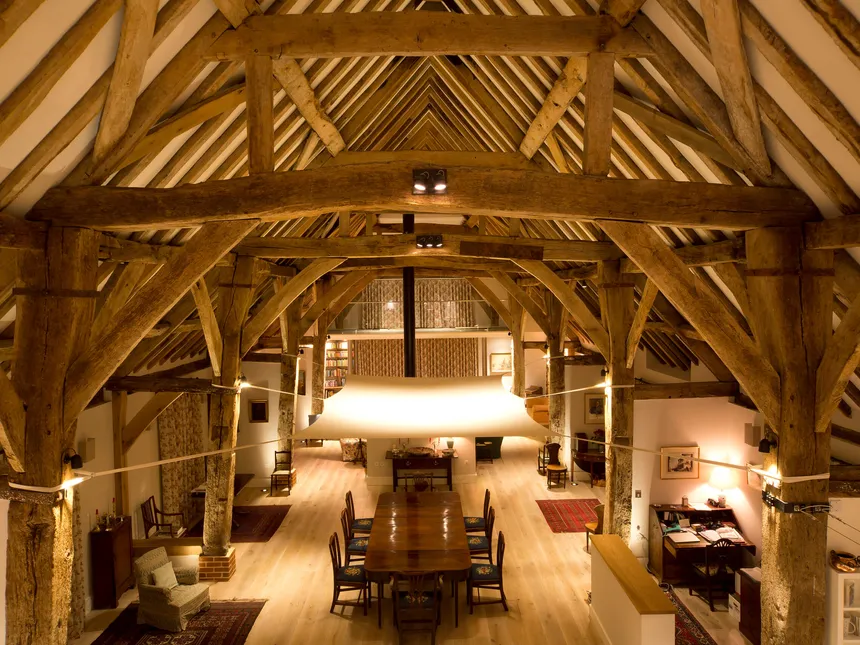
More details on the practicalities of the lighting design for our 15th century Hampshire barn project

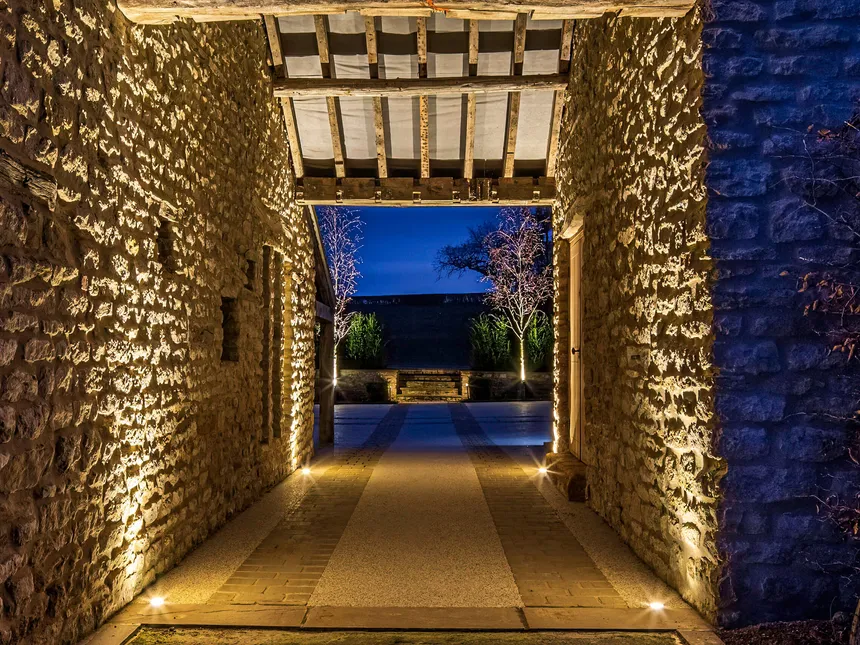
There comes a point every autumn when a room that felt perfectly comfortable throughout the summer suddenly feels different.
The daylight disappears earlier, windows turn into dark reflective surfaces and corners that barely needed artificial light a few weeks ago begin to disappear. The instinct is often to make everything brighter.
But good residential lighting design rarely starts with adding more light. More often, it is about deciding where light is needed, what deserves attention and where a little darkness should remain.
Walk into a room after dark and ask yourself a simple question: what do I actually want to see?
Perhaps it is a painting above the fireplace, the texture of an old stone wall, books and objects within a piece of joinery, or simply enough light beside a chair to read comfortably.
Those are much more useful starting points than asking how many downlights a room needs.
Lighting a few carefully chosen surfaces and objects creates points of interest around the room. Your eye moves between them, giving the space depth and making it feel larger and more considered.
Light everything equally and much of that hierarchy disappears.
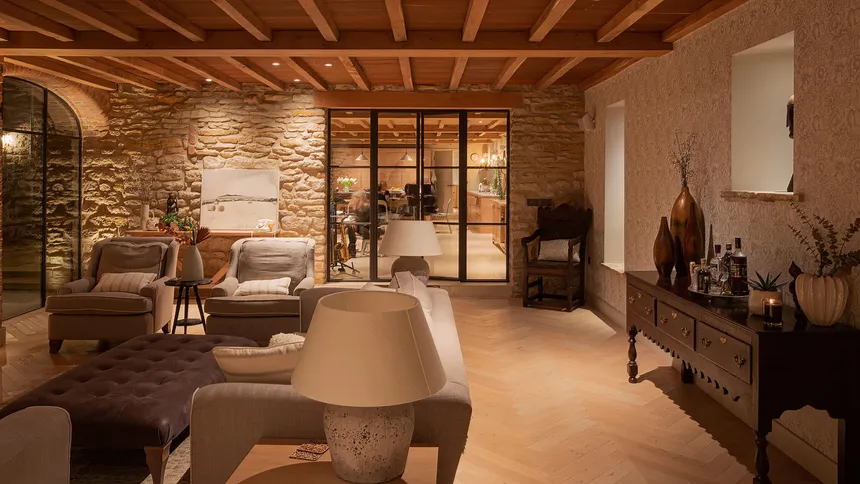
One of the most effective ways to improve home lighting is to use several different layers.
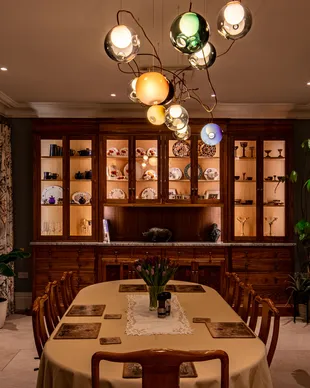
Architectural lighting can reveal artwork, walls, joinery and architectural details. Task lighting puts useful light where it is actually needed. Decorative lighting, pendants, wall lights and table lamps, can add character as well as light. Low-level sources bring warmth and intimacy.
Not every room needs every layer.
The important thing is that individual sources have a reason for being there.
A table lamp beside a sofa may do more for the atmosphere of a sitting room than another pair of ceiling downlights. A carefully positioned spotlight on a painting can create a focal point while indirectly contributing light to the rest of the room.
The result is a room that feels illuminated rather than simply bright.
This sounds counterintuitive in an article about lighting, but darkness is an important part of a successful lighting scheme.
Contrast is what allows us to notice light.
If every wall, surface and corner is illuminated to a similar level, a room can feel flat. Allowing quieter areas between pools of light creates depth and gives greater emphasis to the things that have been deliberately illuminated.
It can also make a room feel calmer.
This becomes particularly noticeable during autumn and winter, when artificial lighting has to create the atmosphere of a room for much more of the day.
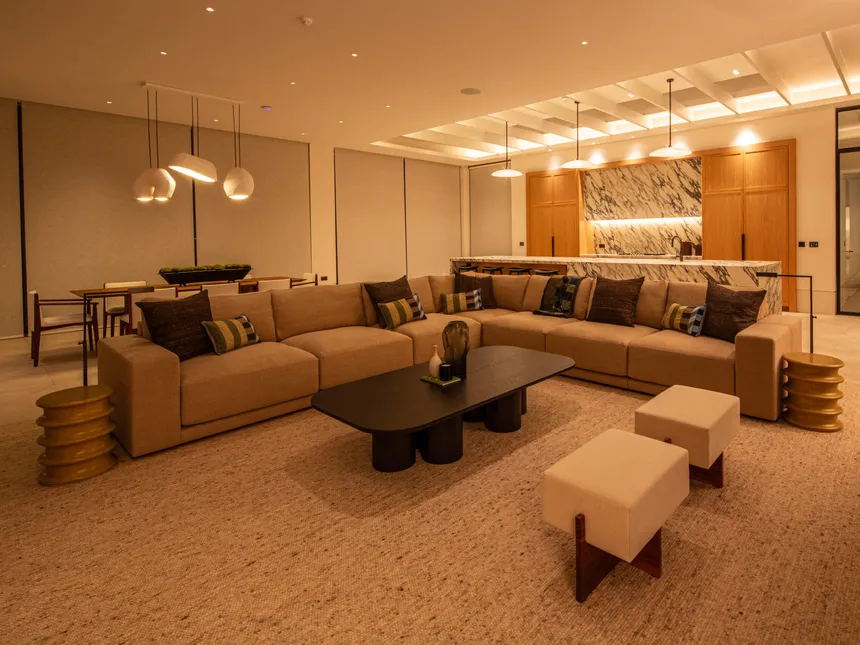
Large areas of glazing are wonderful during daylight. After dark, they can become black mirrors.
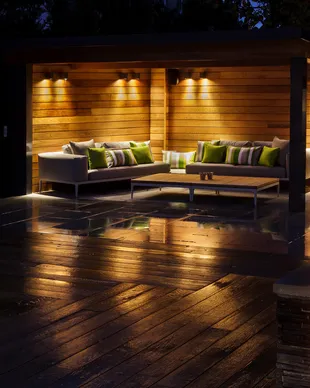
This is one reason we consider exterior lighting as part of a residential lighting scheme rather than treating the garden as an entirely separate project.
You don't need to illuminate the whole landscape.
A beautifully lit tree, a section of planting, a wall or another carefully chosen feature can give the eye somewhere to travel beyond the glass. Instead of the room stopping at the window, the view continues outside.
In winter, this can make a surprisingly significant difference to how an interior feels.
The light you need at 7am isn't necessarily the light you want at 9pm.
A kitchen might need excellent task lighting while food is being prepared, softer light when people sit down to eat, and something quieter again later in the evening.
Likewise, a sitting room may need enough light for reading but a completely different atmosphere when entertaining.
This is where dimming and lighting controls become particularly valuable.
Rather than treating each fitting independently, different lighting scenes can bring several sources together. The complexity sits quietly in the background; using the room remains simple.
Good lighting should allow the things in your home to look as they were intended.
Paint, timber, fabrics, artwork, stone and food can all appear noticeably different under poor-quality artificial light.
Colour rendering is therefore particularly important in residential lighting design. But specifications alone don't tell the whole story. Colour temperature, intensity, beam quality and the surrounding surfaces all influence what we ultimately see.
This is especially important when lighting artwork, where subtle differences in colour and tone may be fundamental to the piece.
The darker months are actually an excellent time to assess the lighting in your home.
Rather than switching everything on at once, experiment.
Turn off the main ceiling lighting and use only the lamps. Add individual architectural lights one at a time. Look at which parts of the room disappear and which sources create glare rather than contributing anything useful.
You may find that the problem isn't a lack of light at all.
It may simply be that the light you already have isn't in the right place.
We spend a great deal of time thinking about how architecture responds to natural light. Artificial light deserves the same consideration.
At Brilliant Lighting, we design residential lighting around the architecture, interiors, artwork and most importantly the way people actually use their homes.
That might mean a carefully focused light on a favourite painting, beautifully integrated architectural lighting, a table lamp in exactly the right place or a sophisticated control system reduced to one simple button.
The objective isn't to make a home brighter.
It's to make it feel right, whatever the time of day or year.