Blog: Brilliant light a unique art collection at Hever Castle
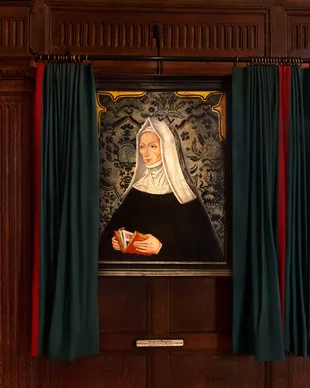
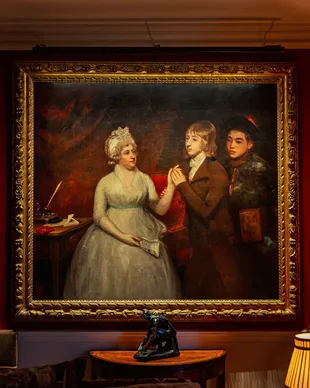
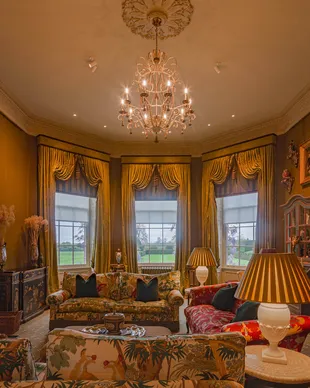
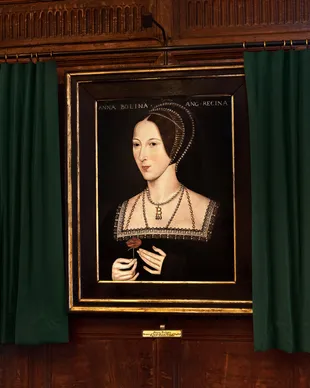
The team finalise preparations for the launch of the Tudor exhibition at Hever Castle and fine tune the lighting.
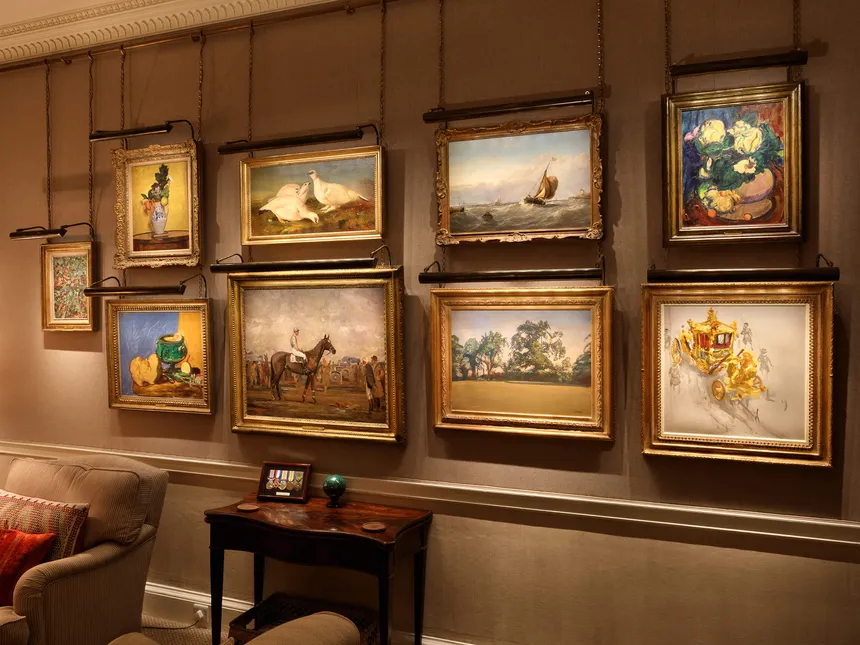
Hallways, corridors, and landings do a lot of work in a home. They connect rooms, guide movement, and set the tone between spaces. Yet they’re often lit as an afterthought: bright enough to walk through, but visually flat once the sun goes down.
If you’ve hung artwork in these in-between areas, you’ll know what happens next. In daylight the pieces can feel perfectly placed, but at night they slip into shadow while a row of ceiling downlights lights the floor instead of the walls. The space reads as a transition, not a destination.
A considered picture light changes that. It turns a corridor into a sequence of intentional moments, giving artwork presence and making the route through the home feel more composed, more personal, and more atmospheric.
Most lighting plans prioritise the rooms where people linger: kitchens, living spaces, bedrooms. Circulation tends to inherit a simple line of downlights down the middle, which is rarely designed to flatter walls or artwork. The floor may be bright, but the walls remain dim, which can make the whole space feel narrower and less inviting.
The irony is that circulation spaces are where you experience the home in motion. They’re the thread that ties everything together, so small improvements here often have an outsized impact on how cohesive a home feels in the evening.
They also offer some of the most memorable viewpoints in a home. A beautifully lit painting glimpsed at the end of a corridor, or a piece softly illuminated on a landing as you move upstairs, can create a real moment of magic. These views are worth thinking about early, because the best results come when the lighting and artwork locations are considered together.
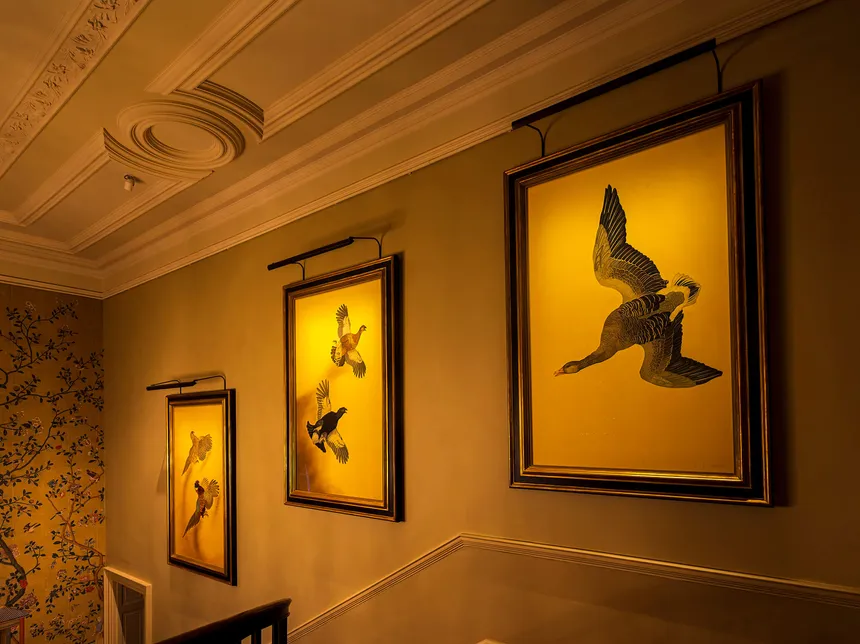
The shift is simple: light what you want people to notice.
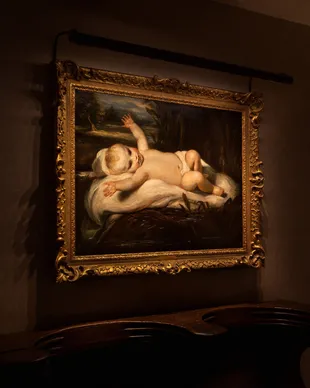
When you introduce controlled vertical illumination, with light directed onto the face of the artwork, you create a focal point and a sense of rhythm along the route. Walls gain depth. Details in the frames return. And the corridor starts to feel composed, even when the overall light level is kept low and comfortable.
In practice, good picture lighting doesn’t look like a bright stripe above a frame. It looks calm and even. The viewer registers the artwork first, not the fitting.
Picture lighting is especially effective in hallways and landings because it delivers impact without visual noise. Instead of relying on ceiling light alone, you add a dedicated layer that brings the wall to life. This creates a more intentional pace through the home, helps guide the eye along longer corridors, and makes artwork legible after dark without needing the whole space to feel bright.
It’s also one of the most efficient ways to add designed atmosphere to a circulation space. You’re not rebuilding the architecture; you’re simply choosing what the light should celebrate.

The difference between nice and genuinely refined is almost always control: of placement, brightness, switching, and visual comfort.
Start by thinking about artwork locations early, especially if you are renovating or building from scratch. You don’t need to know the exact artwork from day one, and the final size or shape can follow later, but it helps to know where the centre of the artwork is likely to be. That allows the right cable positions and lighting provision to be planned in advance, rather than trying to solve it after the walls are finished.
Next, consider alignment and proportion. A picture light should sit cleanly with the frame and be positioned so the artwork is illuminated evenly, rather than washing the wall above it. In a narrow corridor this matters even more, because you’re often viewing the piece from close range. Small errors in position or angle become obvious quickly.
Viewpoints matter too. Circulation spaces are experienced from several perspectives: walking towards a piece, passing alongside it, seeing it from another room, or catching it at the end of a hallway. A picture light should support those moments, helping the artwork read well as part of the journey through the home.
Glare control still matters, particularly in narrow routes and staircases where the viewing angle changes as you move. A well-specified picture light keeps the illumination on the artwork and out of the viewer’s line of sight, avoiding hotspots, scallops, or stray brightness that distracts from the piece itself.
Colour quality and consistency are the quiet foundation of the scheme. Circulation spaces often connect multiple lighting zones, so a mismatch in colour temperature from one area to the next can make a home feel disjointed. For artwork, consistent colour rendering is just as important: finishes, pigments, and frame materials look more intentional in the evening when the light is stable and well matched.
Finally, think carefully about switching and circuiting. Picture lights, and other focal-point lighting, are most effective when they can be controlled independently from the general circulation lighting. Put them on a dedicated circuit or scene so they can be used as a gentle evening layer, or paired with subtle ambient lighting for balance. A corridor rarely needs to be bright; it needs to feel calm, confident, and considered.
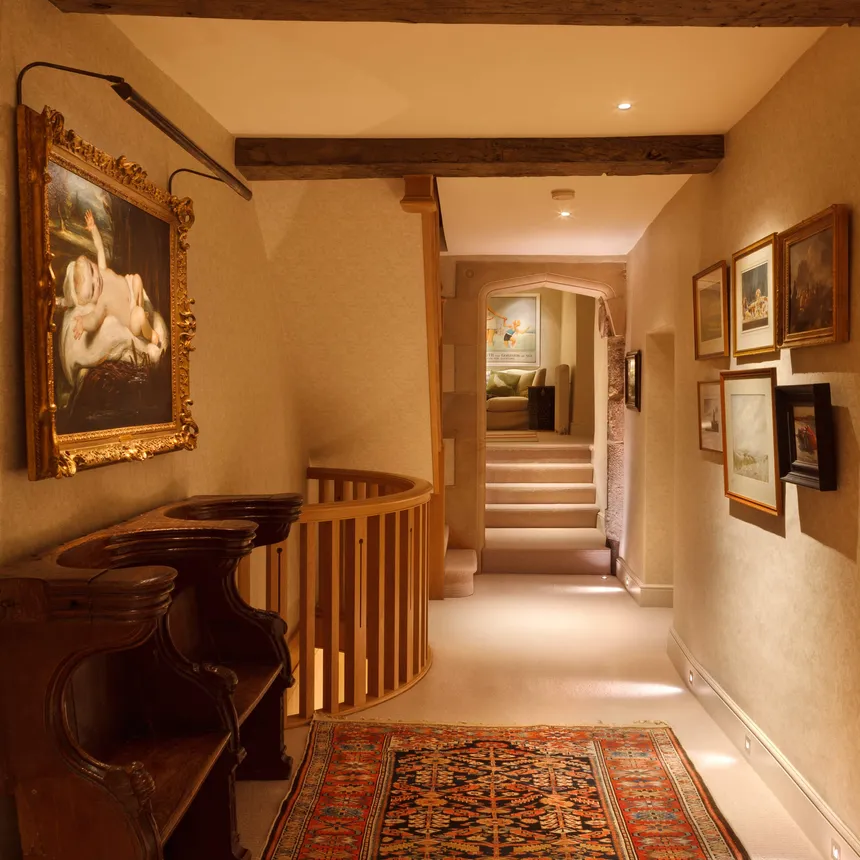
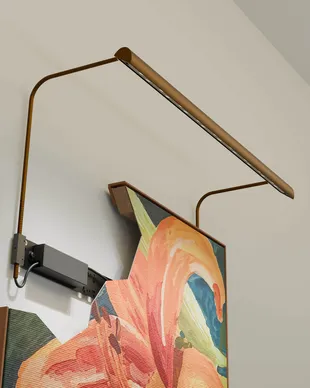
This is exactly the kind of application ArtView II is designed for: discreet picture lighting with controlled output that elevates walls without cluttering the architecture.
In circulation spaces, you need a fitting that looks refined up close, performs reliably night after night, and delivers light precisely where it’s needed: on the artwork. The aim is to make the piece feel present and beautifully integrated, while the fitting itself remains visually quiet.
On a stair wall, picture lighting can bring consistency to a space where viewing heights and angles change as you move. It’s one of the simplest ways to turn a stair run into a deliberate feature rather than a shadowy transition.
In a long hallway, a single hero piece can anchor the view, with supporting frames creating rhythm along the run. When each piece is lit with restraint, the corridor feels curated rather than simply lit for movement.
On a landing, one well-lit artwork can transform a dead zone into a moment of warmth and identity, especially in homes where the landing is seen from multiple rooms.
The most common mistake is lighting only the route and not the walls. A row of downlights down the middle of a corridor may make the floor bright enough, but it often leaves artwork in shadow and makes the space feel flatter and narrower than it needs to.
Another common issue is not planning artwork locations early enough. If you are renovating or working on a new build, think in advance about where key pieces or focal points might sit, even if the exact artwork comes later. Knowing the likely centre point of the artwork means cabling and controls can be allowed for before the walls are closed up.
Circuiting is another detail that makes a big difference. If picture lights are grouped with all the general corridor lighting, you lose the ability to create atmosphere. Artwork and focal-point lighting should ideally be controlled independently, so it can be used as its own layer.
Alignment errors are also a giveaway. If the fitting doesn’t sit cleanly with the frame, or the light falls unevenly across the piece, the installation can read as improvised rather than intentional.
Glare is worth watching too, particularly in narrow routes and staircases. If you notice the source before you notice the artwork, the balance is wrong. And finally, avoid mixed colour temperatures along the route; a corridor is a connecting thread, and consistency is what makes it feel cohesive.
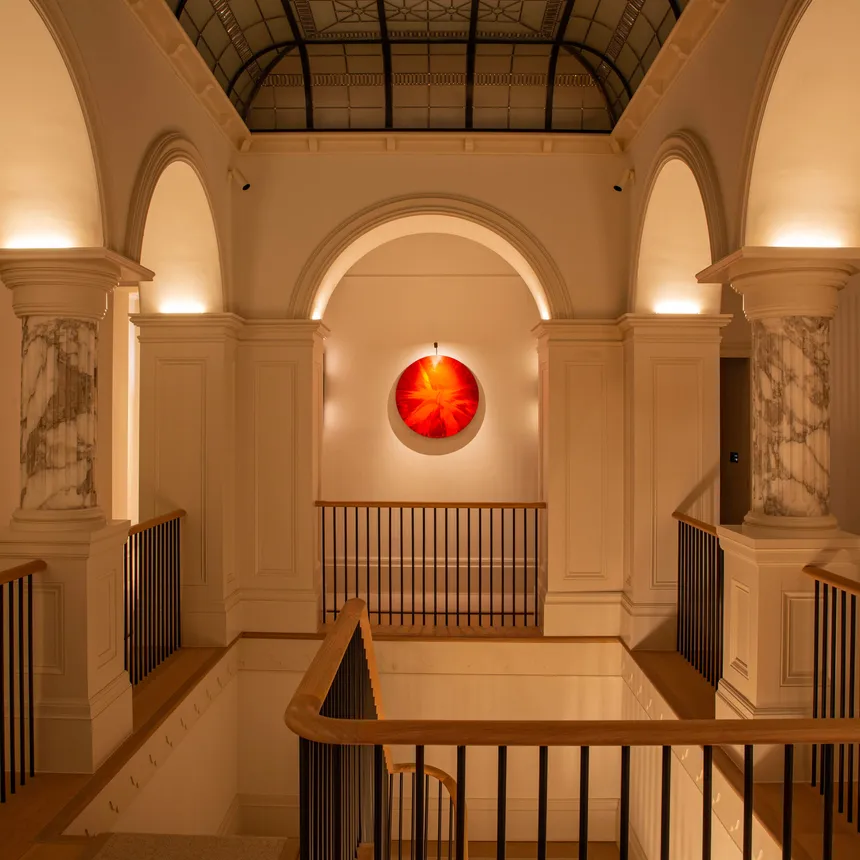
You don’t need to remodel a hallway to make it feel like part of the design story. You need to light with intention.
A well-lit artwork wall transforms circulation spaces into calm, considered moments, bringing warmth, rhythm, and a sense of arrival to the areas people move through every day.
If you’re about to undertake a renovation or new build, talk to us about your lighting design early so artwork, focal points, cabling, and controls can be planned properly from the start. And if you’d like to discuss picture lights for your artwork, we can help you choose a solution that feels refined, comfortable, and beautifully integrated.