Blog: LED lighting and lighting design
Exploring the relationship between LED lighting, lighting design and the characteristics of LEDs
Light is rarely noticed when it’s done well. It simply feels right. Yet one of the most influential decisions in any lighting scheme comes down to something highly technical: how the colour temperature behaves when the light is dimmed.
Warm dimming and fixed CCT are often presented as simple alternatives. In reality, they shape how a space is experienced — morning to evening, task to relaxation, bright clarity to soft retreat. Understanding the difference is less about preference and more about intent.

Correlated Colour Temperature (CCT), measured in Kelvin, defines whether white light appears warm or cool. Lower numbers (3000K and below) feel warmer and more intimate. Higher numbers (4000K and above) feel cleaner and more energising.
But the specification alone doesn’t tell the whole story. What matters is how that colour temperature behaves as light levels change. This is where warm dimming and fixed CCT diverge.
Warm dimming technology allows the colour temperature to shift gradually as the light output reduces. At full brightness, the light may sit at 3000K. As it dims, it gently warms towards 2200K–2400K, echoing the behaviour of traditional incandescent lamps. That shift is subtle, but perceptible.
As brightness drops, our eyes expect warmth. It’s what we associate with firelight, candlelight and evening interiors. When modern LED lighting dims without warming, the result can feel flat or slightly cold. Warm dimming restores that depth.
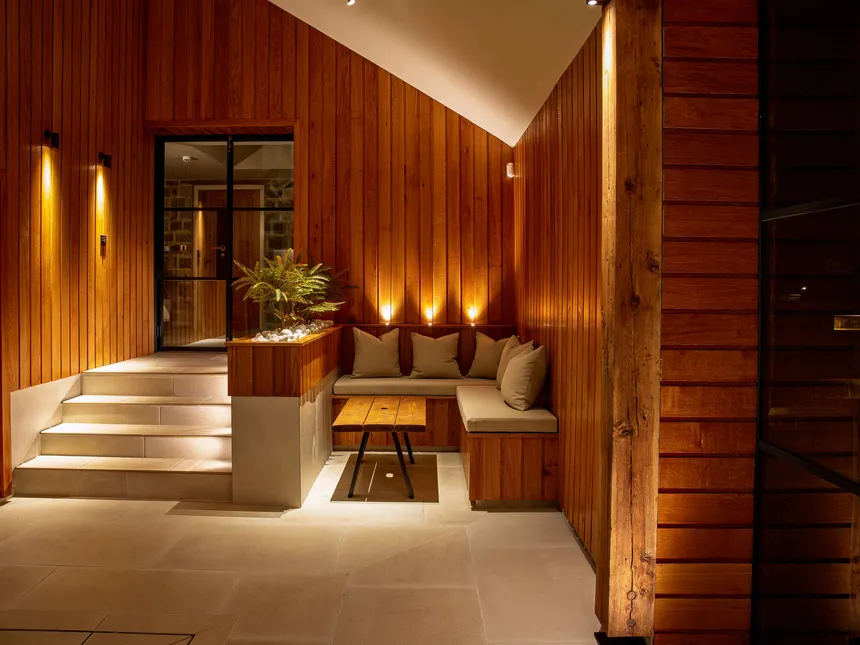
In residential spaces such as living rooms, bedrooms, dining areas, this creates a natural transition from functional daytime light to a more intimate evening atmosphere. The room doesn’t simply become darker; it becomes softer.
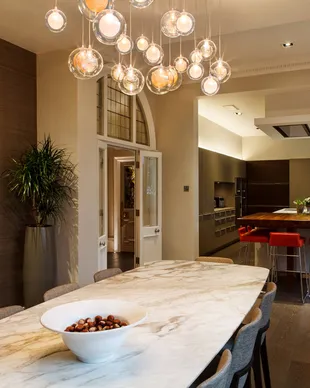
In hospitality environments, the effect is even more pronounced. A restaurant that maintains a static 3000K as it dims can feel restrained. Introduce warm dimming and the space relaxes visually as the evening progresses. Warm dimming is not about drama. It’s about emotional calibration. However, it is not universally appropriate.

Fixed CCT maintains a constant colour temperature regardless of dimming level. If specified at 3000K, it remains 3000K whether at full output or reduced to 10%. In spaces where clarity and consistency matter, this stability is critical.
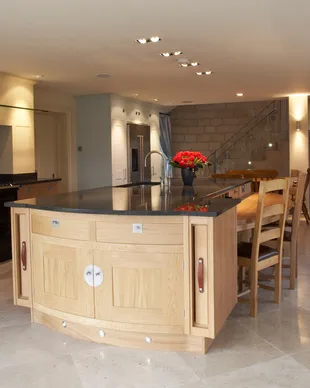
Kitchens are a good example. When preparing food, visual contrast and accuracy are essential. A warming shift can subtly distort surface tones or reduce the perception of sharpness. Fixed 3000K ensures materials remain consistent and tasks remain precise.
Retail environments depend on this reliability even more. Product colours must remain true throughout the day. A garment, tile sample or piece of artwork should not appear warmer simply because the lights are dimmed. Workspaces, bathrooms and utility areas also benefit from the clean predictability of fixed CCT. In these settings, light supports performance first and ambience second. Fixed CCT is less emotive, but more exact.

The decision is rarely binary. A well-considered scheme often uses both approaches within the same project. The key is understanding how the space is used and how it transitions over time.
A typical residential layout might include:
The important consideration is sightlines. When two areas are visually connected, abrupt changes in colour temperature can feel disjointed. Harmony is achieved not by uniformity, but by thoughtful progression.
Technical compatibility also plays a role. Warm dimming fittings require appropriate drivers and control systems to perform correctly. Without this integration, the intended effect can be compromised. As with most elements of lighting design, success lies in the detail.
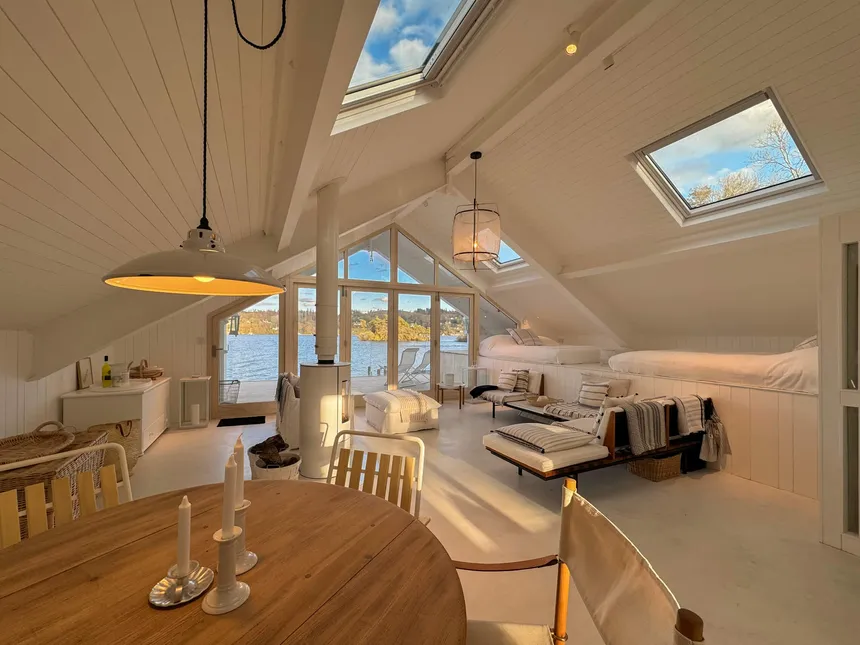
Two fittings labelled “3000K” may perform very differently once installed. Beam control, colour rendering, dimming curve and surface reflectance all influence how light is perceived. CCT is one variable within a broader composition.
Warm dimming introduces movement and mood. Fixed CCT introduces precision and steadiness. Neither is inherently superior. Each serves a purpose.
The craft lies in understanding not just how bright a space should be, but how it should feel, and how that feeling changes throughout the day.
When that behaviour is considered early in a project, lighting becomes seamless. When it isn’t, the space may function, but it rarely resonates.
Light should support the architecture quietly, adjusting itself to the rhythm of living and working within it.
Choosing the right approach is where that begins.